Aenean in class efficitur
September 14, 2022
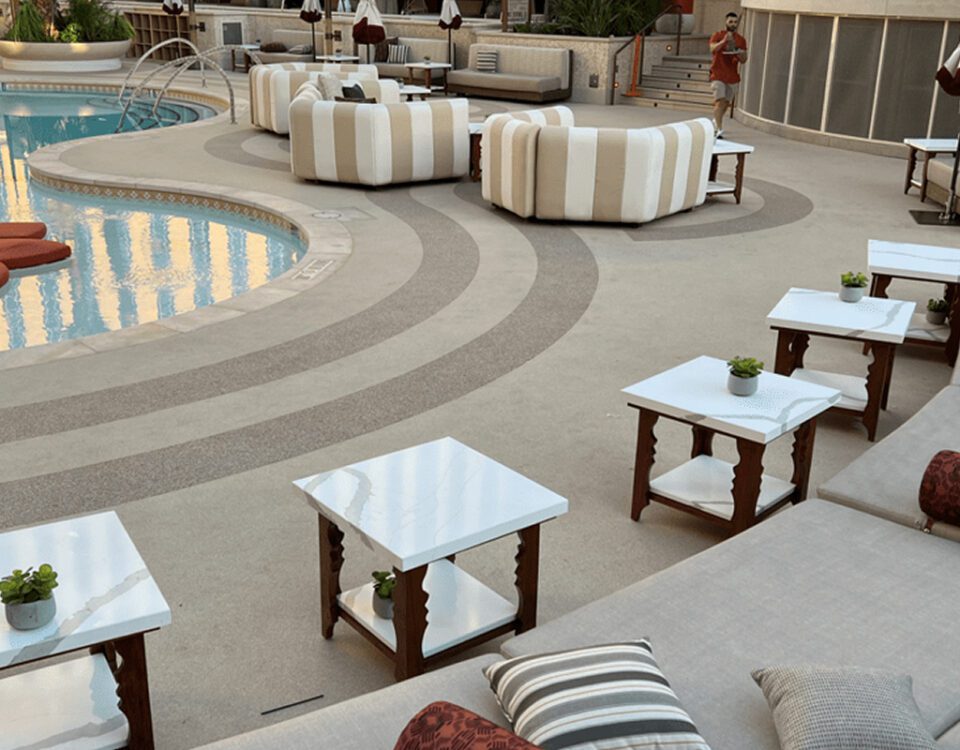
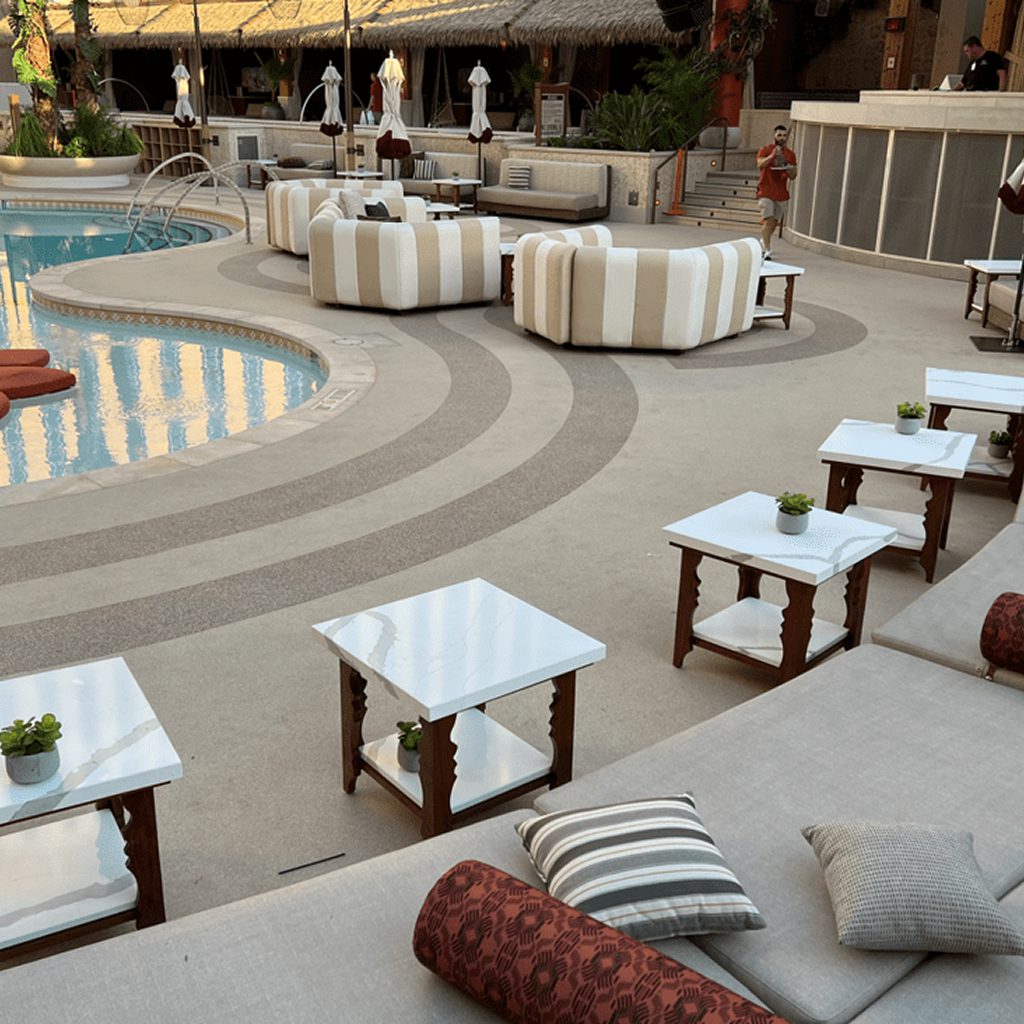
TAO Beach Club Las Vegas: Luxury Meets Innovation with Ultracera’s Zero-Silica Outdoor Table Tops
May 14, 2025
Australia takes a big step towards safety with the ban on quartz products containing crystalline silica from July 2024. At Ultracera Surfaces, our Zero Crystalline Silica products have been ahead of the game for over 6 years. In this post, we’re going to compare the two in an effort to help you understand this new premium material better.
Ultracera vs. Quartz Countertops: What Are They?
What is Quartz?
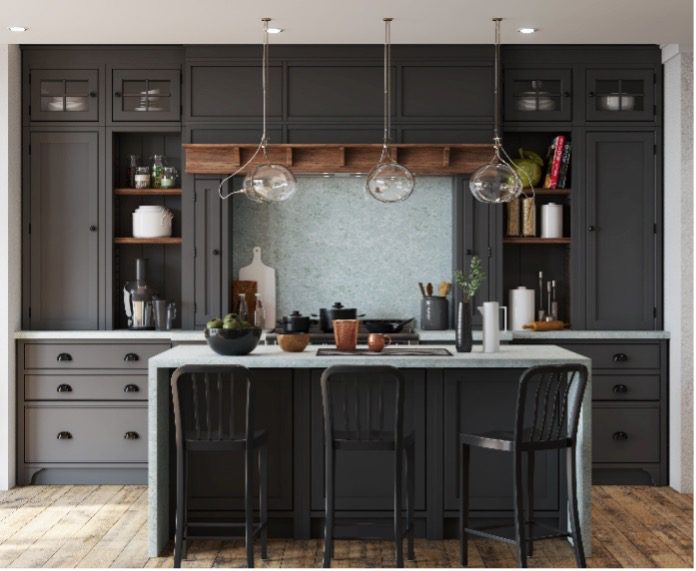
Quartz countertops are created by combining 90% natural quartz and minerals with chemical polyester resins,pigments and other decoratives. Quartz countertops are in virtually any color and style and many edge profiles, like bevel, bullnose, ogee, dupont, cove, chisel, and laminated premium edges. The common thicknesses are 1.5cm, 2cm and 3cm and standard slabs are 3000*1400mm and 3200*1600mm. Quartz caters to various indoor applications, including kitchen countertops, island tops, backsplashes, bathroom countertops, vanity tops, shower walls, stairs, floors, etc. It stands up to juice, oil, wine, tomato, coffee and other sources of stains in the kitchen, which is the most attractive to homeowners. It won’t chip or crack easily. Quartz countertops’ benefits include durability, attractive appearance, non-porous nature, ease of cleaning, ease of maintenance, uniformity, and ease of customization. Quartz has a crystalline body with 90% up crystalline silica, which is its disadvantage.
What is Ultracera?
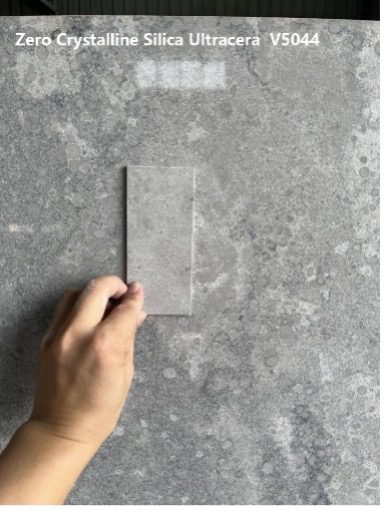
Ultracera is created using synthetic porcelain materials, polymer resins, pigments, and other decorative materials. Replacing the crystalline silica quartz with refined porcelain-based materials and using mature quartz technology, Ultracera has received patents for invention in the U.S.A. Ultracera materials can create lots of colors and styles and in desired edge profiles. The available thickness NOW are 1.5cm, 2cm and 3cm and the available slab sizes are 3000*1400mm and 3200*1600mm. Ultracera surfaces cater to various indoor and outdoor applications, including kitchen countertops, vanity tops, furniture tops, stairs, walls and floors. From wall facades to outdoor kitchen tops, and furniture surfaces, Ultracera redefines its application breadth. Ultracera products perform in the Mohn hardness 6.0+, glossy degree 58+ available, stain resistance, scratch resistance, non-porous, ease of customization, easy clearance, and easy maintenance. Ultracera materials have an amorphous body and are refined synthetically from porcelain clay, which contains <1% Crystalline Silica and is worker-friendly.
Ultracera vs. Quartz Countertops: Commons & Differences
Now that you know the characteristics of the quartz and Ultracera, let’s put the two head-to-head against each other and find their commonalities and differences. This should be enough to give you an idea of why Ultracera is called a new premium material.
What are the commons – Quartz and Ultracera?
- Technical performance, high-quality standards, Mohs 6.0+ hardness, scratch resistance, stain resistance, easy cleaning, non-porous, easy maintenance.
- Aesthetical performance, created in any color and style and desired edge profiles.
- Processing procedure, same skills, same tools, same equipment and same machines for polishing, cutting, edge processing, hole drillings and so on.
- Standard slab sizes, same available thicknesses 15,20,30mm, 3000*1400mm & 3200*1600mm.
- Indoor Applications, Kitchen countertops, vanity tops, furniture table tops, shower walls, stairs, and floors.
- Installation, same skills and same equipment.
- Packing, Loading and Storaging, same.
- Clearance and Maintenance, same detergents, same cleaning and maintenance.
What are the differences – Quartz and Ultracera?
- Quartz contains 90% up crystalline silica, while Ultracera contains <1% crystalline silica, a worker-friendly product.
- Quartz has the crystalline body while Ultracera has the amorphous body, and their appearances can have 90% close but not 100% same. Most colors can be converted between quartz and ultracera, and a few colors can not. Ultracera colors C3002 Summer Sky, C3004 Celestial Spring, C6046 Planet Autumn, and C3802 Gravel Green are not available in the quartz colors. Ultracera products have better clarity, shine, a more natural appearance, and a better sense of depth.
- Quartz materials are from the natural quartz quarry directly, while Ultracera materials are refined synthetically from the porcelain clay, which are more environmental friendly, sustainable and ecological.
Conclusion
Ultracera is a new premium material, ensuring that the finished product maintains or exceeds the technical and aesthetic qualities of conventional quartz countertops. Polishing, cutting and any other finishes can be done by the same tools of machineries as to the quartz slabs.